
If you run an apparel, lifestyle, or footwear business in 2026, you already know the pain points that generic accounting software or spreadsheets can’t solve: thousands of SKUs split across style, color, and size; stock scattered across stores, warehouses, and e-commerce channels; and sales teams who need real-time numbers, not yesterday’s report. This is exactly the gap that Apparel & Footwear ERP software is built to close.
This guide breaks down what apparel and footwear ERP software actually does, the must-have features for 2026, how to choose the right system, and why an industry-specific platform beats a generic ERP every time.
What Is Apparel & Footwear ERP Software?
Apparel & Footwear ERP software is an enterprise resource planning system purpose-built for businesses that manufacture, distribute, or retail clothing, fashion accessories, and footwear. Unlike generic ERP tools designed for “any” industry, an apparel-specific ERP understands the unique structure of fashion inventory — every product exists as a matrix of style, color, and size, not a single SKU.
A true industry ERP unifies several functions that fashion and footwear businesses usually run on disconnected tools:
- POS billing for retail counters and franchise stores
- Inventory and warehouse management across multiple locations
- Accounting and GST/tax compliance
- Purchase and vendor management
- Manufacturing and production tracking (for garment and footwear manufacturers)
- Wholesale and B2B order management
- E-commerce and omnichannel sync
When these modules talk to each other in real time, a business owner finally gets one accurate picture of stock, sales, and cash flow instead of five conflicting spreadsheets.
Why the Apparel & Footwear Industry Needs an Industry-Specific ERP
1. Style-Color-Size Complexity-
A single shirt design can generate 30+ SKUs once you multiply colors and sizes. Generic ERPs treat each as a flat line item, which makes stock-taking and reordering a nightmare. Industry-built systems like GSoft’s Apparel-Lifestyle & Footwear ERP are designed around this matrix structure from day one, so size/color breakdowns, reorder points, and barcode generation work the way fashion retailers actually operate.
2. Seasonal and Trend-Driven Inventory
Last season’s stock needs to move through markdowns, while new collections need fast onboarding. ERP software with built-in inventory analytics helps identify slow-moving stock before it becomes dead stock sitting in a warehouse.
3. Multi-Channel, Multi-Location Selling
Most apparel and footwear brands today sell through physical stores, wholesale distributors, marketplaces, and their own e-commerce site simultaneously. Without centralized inventory management software, overselling and stock mismatches across channels are almost guaranteed.
4. Wholesale & B2B Order Complexity
Exhibition orders, field sales, and back-office order processing all need to sync without manual re-entry. This is where dedicated B2B order management tools — like a connected mobile ordering app — save apparel wholesalers hours of reconciliation every week.
Core Features to Look For in 2026
When evaluating apparel and footwear ERP software this year, prioritize these capabilities:
Style-Color-Size (SCS) Inventory Management The ability to manage inventory at the matrix level — not just SKU level — with instant size/color-wise stock visibility.
Integrated POS Billing Fast, GST-compliant billing at retail counters that updates inventory and accounting simultaneously, with no manual sync required.
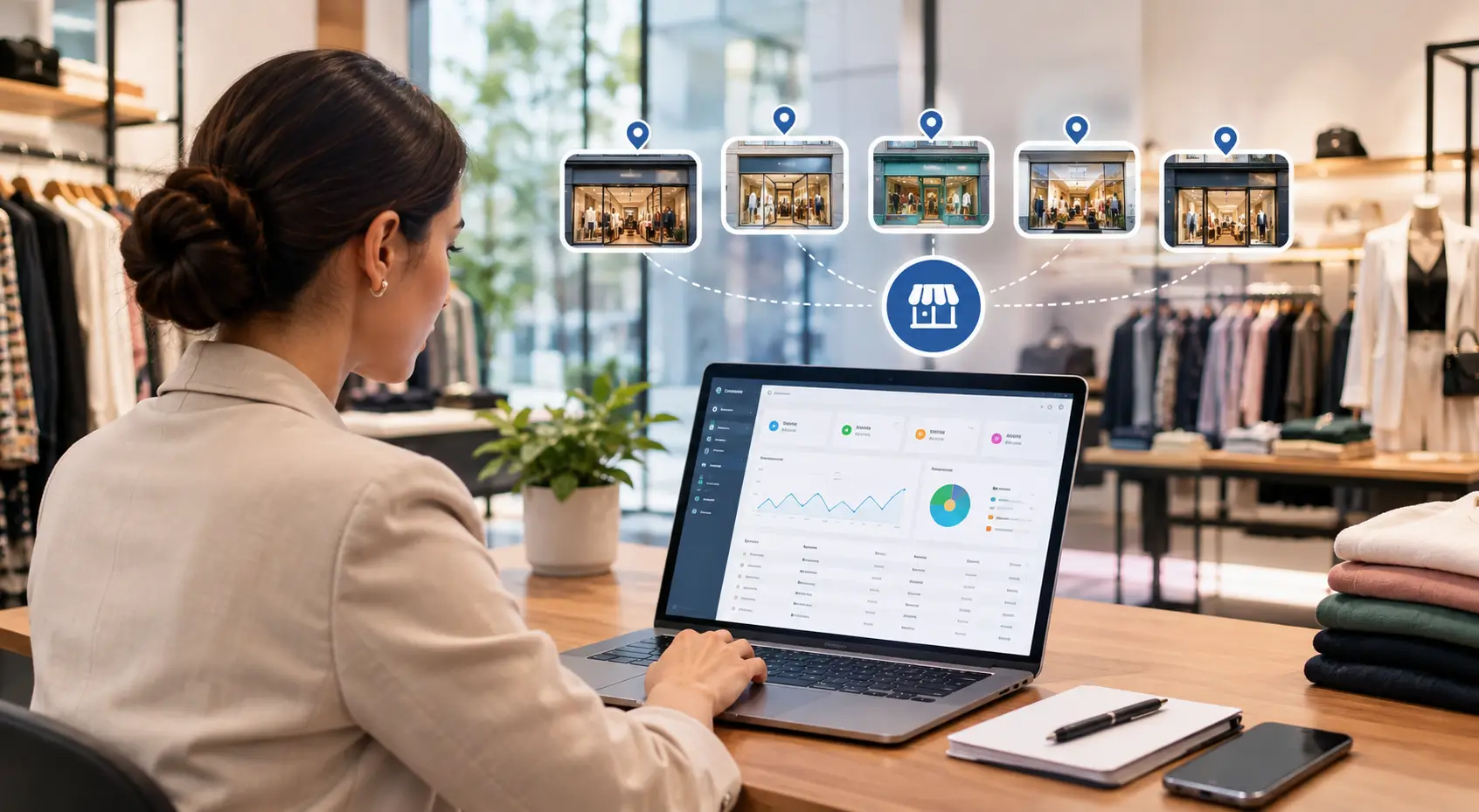
Multi-Store & Warehouse Control Centralized visibility of stock movement across every store and warehouse, so head office always knows what’s available, where.
Real-Time Accounting & GST Compliance Built-in accounting that automatically reflects sales, purchases, and returns — critical for Indian apparel businesses managing GST filings.
B2B / Wholesale Order Management Mobile-enabled order booking for field sales reps and exhibition teams that flows directly into the ERP, eliminating duplicate data entry.
E-Commerce & Marketplace Integration Two-way sync between your ERP and your online store or marketplace listings to prevent overselling and stockouts.
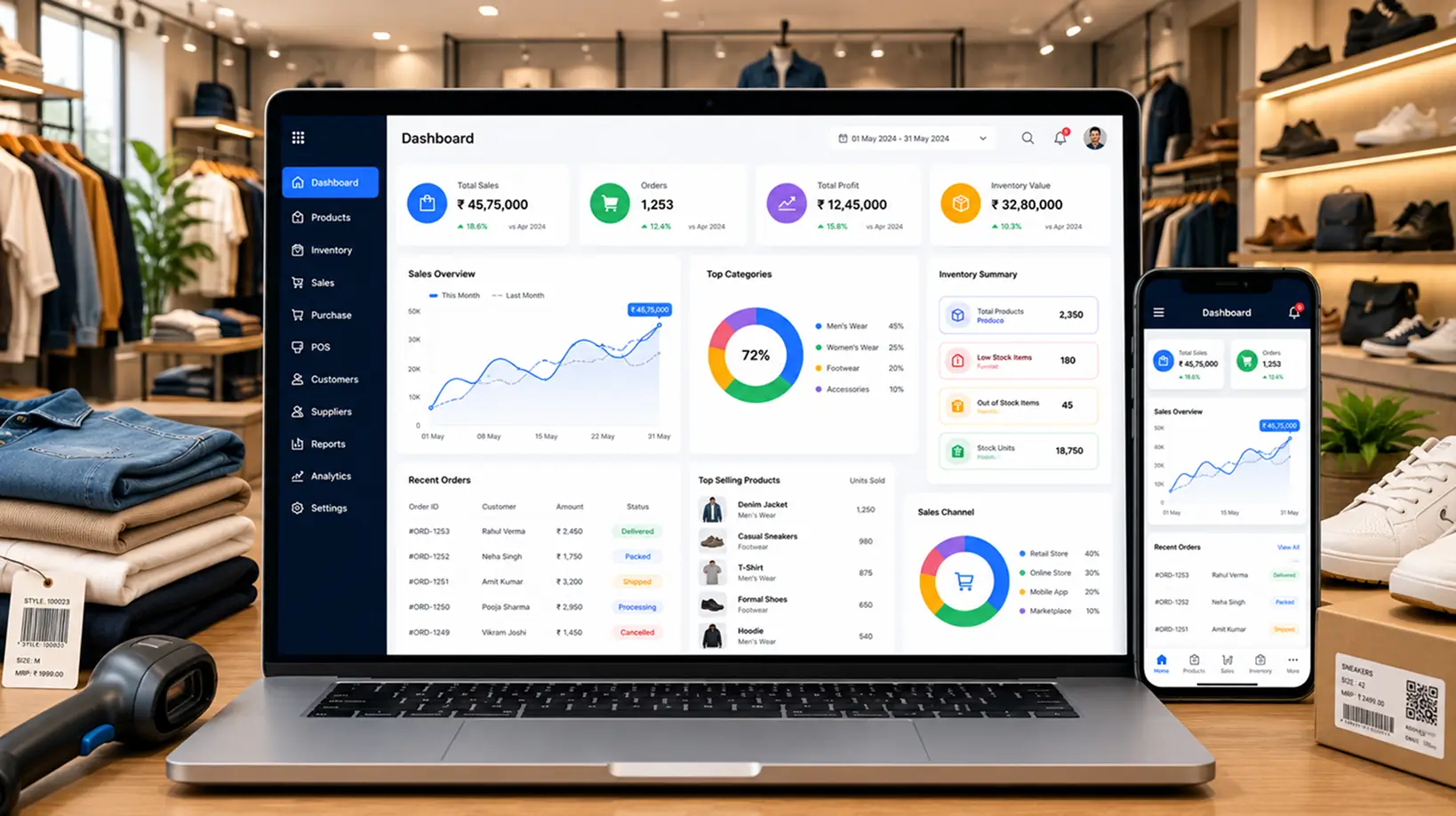
Web-Based Reports & Remote Visibility Even on a desktop ERP, owners and managers need to check business numbers on the go. A web reports portal — like GSoft’s GRetail Web Portal — gives anytime, anywhere access to sales dashboards, inventory health, and supplier data without needing to be on-site.
Payment Gateway & Banking Integrations Native integrations with banks and payment partners (ICICI, HDFC, Canara, YES Bank, Pine Labs, and similar) reduce reconciliation overhead at checkout.
Analytics & Reporting Dashboards Sales trends, fast/slow mover analysis, and stock-aging reports that help merchandising teams make faster reorder and markdown decisions.
Apparel ERP vs. Footwear ERP: Are They Really Different?
Apparel and footwear share more in common than not — both rely on style-color-size inventory logic, both face seasonal demand cycles, and both need
Multi-channel selling support. The main difference is in sizing logic and last/fit attributes specific to footwear, and fabric/material tracking specific to garment manufacturing. A well-built platform handles both verticals under one configurable system rather than forcing you into two separate tools — which is why “Apparel, Lifestyle & Footwear ERP” is increasingly sold as a single category rather than two.
Why Web Reports Matter for Apparel & Footwear Retailers
Retail and wholesale owners rarely sit behind a single desktop terminal all day. Between store visits, supplier meetings, and travel, decision-makers need business numbers available wherever they are — without logging into the core ERP system itself.
This is exactly what GSoft’s GRetail Web Portal is built for. It gives retailers and suppliers a browser-based reporting layer on top of the core ERP, including:
- Sales Analytical Dashboard — real-time sales performance across stores and channels
- Inventory Dashboard — live stock position by location, style, color, and size
- Stock Health Analysis — a quick read on overstocked vs. understocked categories
- Fast & Slow Moving Report — identify what’s selling and what’s sitting, before it becomes dead stock
- Supplier Portal — give vendors visibility into relevant purchase and stock data
- Stock & Purchase Analysis — track purchasing trends against actual stock movement
- Bill-wise Report — drill into individual transactions for audit and reconciliation
- Sales & Stock Ageing Report — flag inventory that’s been sitting too long and needs action
The result is a desktop-grade ERP backbone paired with the remote visibility owners expect in 2026 — without needing to wait for a full cloud migration.
How Apparel & Footwear ERP Software Drives Business Growth
Implementing the right ERP isn’t just an operational upgrade — it directly affects revenue and margins:
1. Reduced Stockouts and Overstock — Real-time, location-wise visibility means you reorder what’s actually needed, not what a spreadsheet guessed.
2. Faster Billing, Better Customer Experience — A responsive POS system at checkout reduces queue time and improves in-store conversion.
3. Lower Manual Errors — Automated sync between sales, inventory, and accounting removes the human error baked into manual data entry.
4. Smarter Purchasing Decisions — Sales and inventory analytics flag fast movers and dead stock early, improving working capital efficiency.
5. Scalable Wholesale Operations — A connected B2B ordering app lets field sales and exhibition teams capture orders on mobile, syncing instantly with the back office — something we cover in our piece on Top 5 Features of GSoft ERP’s POS Software.
How to Choose the Right Apparel & Footwear ERP Vendor
Use this checklist when shortlisting vendors:
- Does the system natively support style-color-size inventory, or is it bolted on?
- Can it scale from a single store to multi-location and franchise operations?
- Does it offer web-based reporting for remote, on-the-go visibility — not just desktop-only access?
- What banking, payment gateway, and e-commerce integrations are pre-built? Check our API & integrations page for examples of what a mature ERP ecosystem should include.
- Is there a dedicated B2B/wholesale order management module, like a mobile ordering app for field sales?
- What does post-sale support look like — is there a dedicated support team, or just a ticketing portal?
- Is pricing transparent and scalable as you grow? Review the pricing plans upfront rather than discovering hidden costs later.
Why GSoft ERP for Apparel, Lifestyle & Footwear Businesses
GSoft ERP, a product of Alpha ERP, has been built specifically for apparel, lifestyle, and footwear retailers, wholesalers, and manufacturers across India since its founding as a billing solution in 2001. Today it offers:
- Centralized inventory and POS billing across multiple stores and warehouses
- Native style-color-size inventory logic built for fashion and footwear catalogs
- G-Order B2B for wholesale and field-sales order management
- Integrations with leading banks, payment gateways, and e-commerce platforms via the GSoft Integrations suite
- A robust desktop ERP backbone paired with the GRetail Web Portal for real-time, remote business reporting
- A track record with apparel, garment, and footwear brands across India, refined through two decades of industry-focused product development
Explore the full feature set on our Apparel-Lifestyle & Footwear ERP page, or browse more implementation insights on the GSoft ERP Blog.
Frequently Asked Questions
1. Why do apparel, lifestyle, and footwear businesses need industry-specific ERP software?
Generic ERP systems aren’t built to handle style-color-size inventory matrices, which are central to how fashion and footwear businesses manage stock. An industry-specific ERP like GSoft handles inventory, sales, purchasing, and operations in a way that matches real apparel workflows.
2. Can apparel ERP software manage multiple stores and warehouses?
Yes. A good apparel ERP gives centralized, real-time visibility into inventory and stock movement across every store, warehouse, and business location.
3. Does apparel ERP support B2B and wholesale order management?
Yes — look for ERP systems with a connected mobile ordering app that lets field sales reps and exhibition teams capture wholesale orders that sync directly with the back office, such as G-Order B2B.
4. Should I choose cloud ERP or desktop ERP for my apparel business?
GSoft ERP currently runs as a powerful desktop ERP, with the added advantage of the GRetail Web Portal — giving you real-time sales, inventory, and supplier reports from a browser, anywhere, without needing a full cloud system. (Cloud ERP for GSoft is coming soon — stay tuned to our blog for updates.)
5. What’s the cost of apparel and footwear ERP software in 2026?
Pricing varies by number of users, stores, and modules required. Check GSoft’s transparent pricing plans for current options, or request a custom quote.
Final Thoughts
Apparel and footwear businesses that still rely on spreadsheets or generic accounting tools are leaving margin on the table — through stockouts, overstock, billing errors, and disconnected wholesale operations. An industry-built ERP brings inventory, billing, accounting, and B2B order management into one connected system, giving you the real-time visibility needed to compete in 2026’s fast-moving retail environment.
Ready to see it in action? Book a free demo with GSoft ERP and find out how an apparel-specific ERP can streamline your operations from the shop floor to the back office.