
How to Prepare Your Apparel Store for Diwali Sales 2026
Dhanteras is Friday, 6 November. Diwali is Sunday, 8 November. You have 23 days.
For jewellery showrooms, this period is about gold. For apparel retailers, however, it is an entirely different opportunity — and one that most stores leave partly uncaptured because they are not operationally prepared.
“Diwali ke naye kapde” — new clothes for Diwali — is one of India’s most widely observed traditions. Families across every region buy new ethnic wear before Diwali: sarees, salwar kameez, lehengas, sherwanis, kurtas, and kids’ festive sets. Additionally, Diwali gifting drives demand for clothing sets as family presents. And the overlap with the start of wedding season means ethnic wear demand stays elevated well into December.
This is therefore not just a one-day opportunity. It is a 3-week revenue window — and G-Soft ERP is what helps you run it at full capacity.
The Diwali Apparel Opportunity: What Categories Sell
Not all categories spike equally during the Dhanteras-Diwali period. Specifically, these perform strongest:
Ethnic wear for women: Sarees, salwar kameez, anarkalis, and lehengas lead festive purchases across most markets. Festive-specific prints, embroideries, and fabrics — silk, georgette, chanderi — move fastest.
Men’s ethnic and semi-formal: Kurta-pyjama sets, sherwanis, and Indo-Western combinations spike ahead of Diwali and into wedding season. Consequently, stock these alongside your women’s ethnic range.
Kids’ festive wear: Parents buy new outfits for their children for Diwali puja. This is a category that sells quickly and is often underprepared.
Gifting sets: Fabric sets, stole packs, and ready-made combo sets are popular as Diwali gifts between families and from companies to employees.
EOSS / Discount merchandise: Simultaneously, Diwali is an opportunity to clear summer and monsoon carryover stock through a well-structured End of Season Sale (EOSS). Furthermore, this frees up floor and stockroom space for the new wedding season collection.
Understanding which of these categories your store has in sufficient depth and where you have gaps is step one. G-Soft ERP’s inventory module gives you a category-wise, size-colour-wise stock view right now, so you can identify and fill gaps before the peak window closes.
6 Ways to Maximise Dhanteras & Diwali Sales
1. Stock the Right Ethnic Wear Mix — Right Now
The Diwali ethnic wear buyer is often decisive. They visit with a budget and a preference in mind. If your store does not have the right category, size, or colour — they go elsewhere. Moreover, they rarely come back.
Run your inventory analysis today:
- Which ethnic wear styles are already low on stock from the Navratri period?
- Which sizes are missing across your festive collection?
- Which categories have strong depth vs gaps?
Place top-up orders immediately. Vendors will face heavy demand in the next two weeks. Additionally, identify which styles from last festive season sold through fastest — use that data to prioritise reorders rather than relying on guesswork.
2. Plan Your EOSS Alongside the New Festive Collection
The most effective Diwali retail strategy for apparel is a two-track approach.
Track 1 — EOSS: Discount summer and monsoon carryover stock. Create a clearly marked EOSS section on your floor. Price it to clear, not to linger. This generates footfall from value buyers and frees display space.
Track 2 — New festive collection: Place your Diwali and wedding season new arrivals front and centre. These are full-price items for buyers who want something fresh.
G-Soft ERP supports both tracks simultaneously. Run EOSS at discounted prices while maintaining full-price billing for new collection items — with the correct GST treatment applied automatically to each. Note that GST rate classification for garments is based on MRP, not the discounted selling price. Your billing software must handle this correctly.
3. Activate Your Loyalty Programme Before Diwali
Your existing customers are your fastest Diwali sales. They already know your store, trust your quality, and are likely planning a festive purchase. Furthermore, a loyalty-driven visit is easier to convert than a first-time walk-in.
G-Soft ERP’s CRM and loyalty module shows you:
- Which customers have redeemable loyalty points before Diwali
- Which customers bought last Diwali and have not visited yet this year
- Which customers purchased in Navratri but have not returned since
Use this data to send personalised WhatsApp reminders via Alpha Chatbox — the Meta-verified WhatsApp Business API that integrates with G-Soft ERP. A message that says “Your loyalty points of ₹850 are ready to redeem — visit us before Diwali” converts far better than a generic festive greeting.
4. Speed Up Billing for Peak Day Volume
Diwali shopping peaks sharply in the evening hours on November 6, 7, and 8. During these windows, a slow billing counter does not just lose one customer — it loses the entire queue behind them.
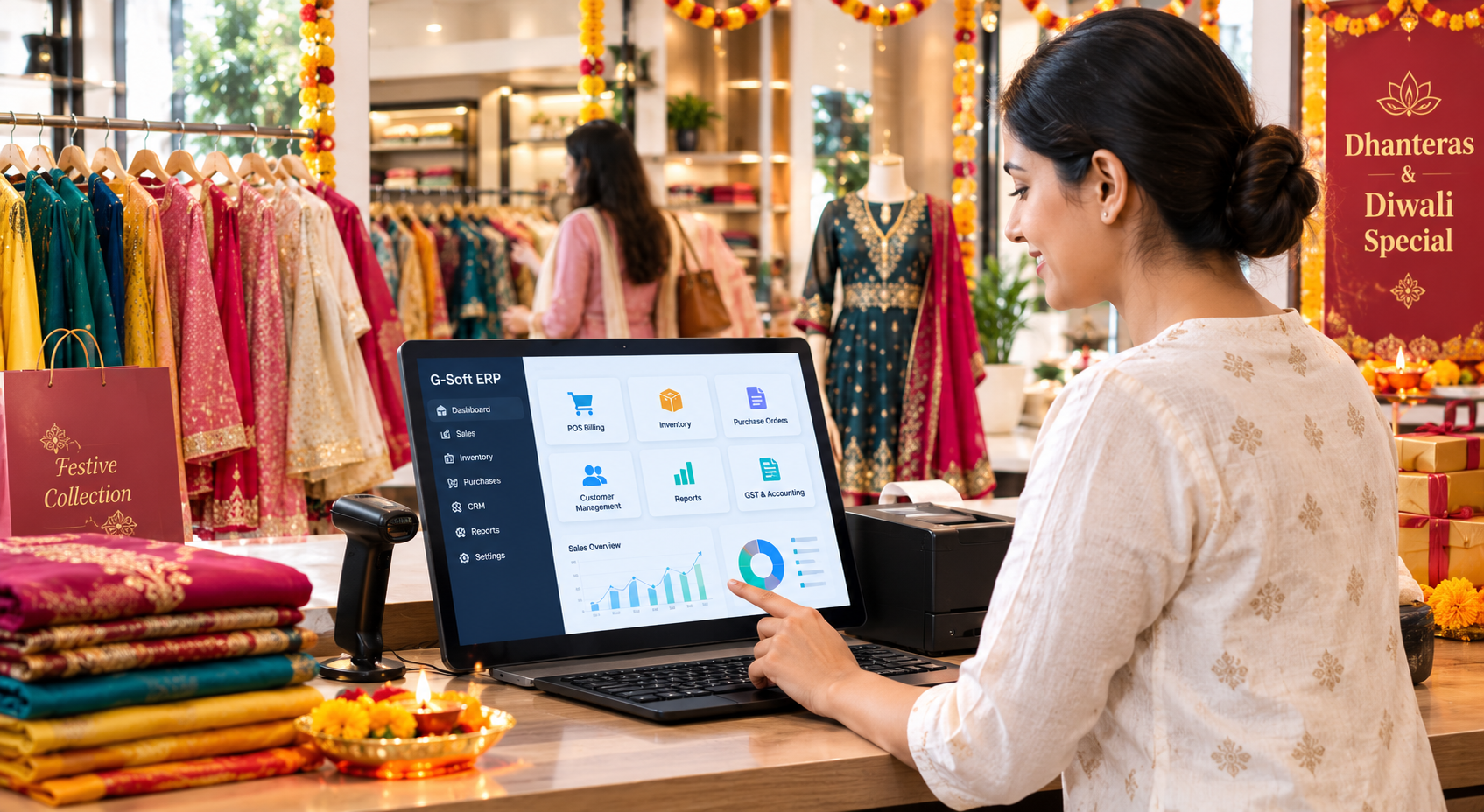
G-Soft ERP’s barcode POS is built for speed. Each piece is scanned, the style, size, colour, and price populate automatically, and the GST invoice is generated in seconds. There is no manual typing of item details. Additionally, returns, exchanges, and loyalty redemptions are handled from the same counter without switching screens.
Before November 6, test every billing counter. Confirm barcode scanners are working. Ensure all staff can process a sale, a loyalty redemption, and an exchange without assistance. Specifically, assign your most experienced billing staff to counters on peak days — not the newest team members.
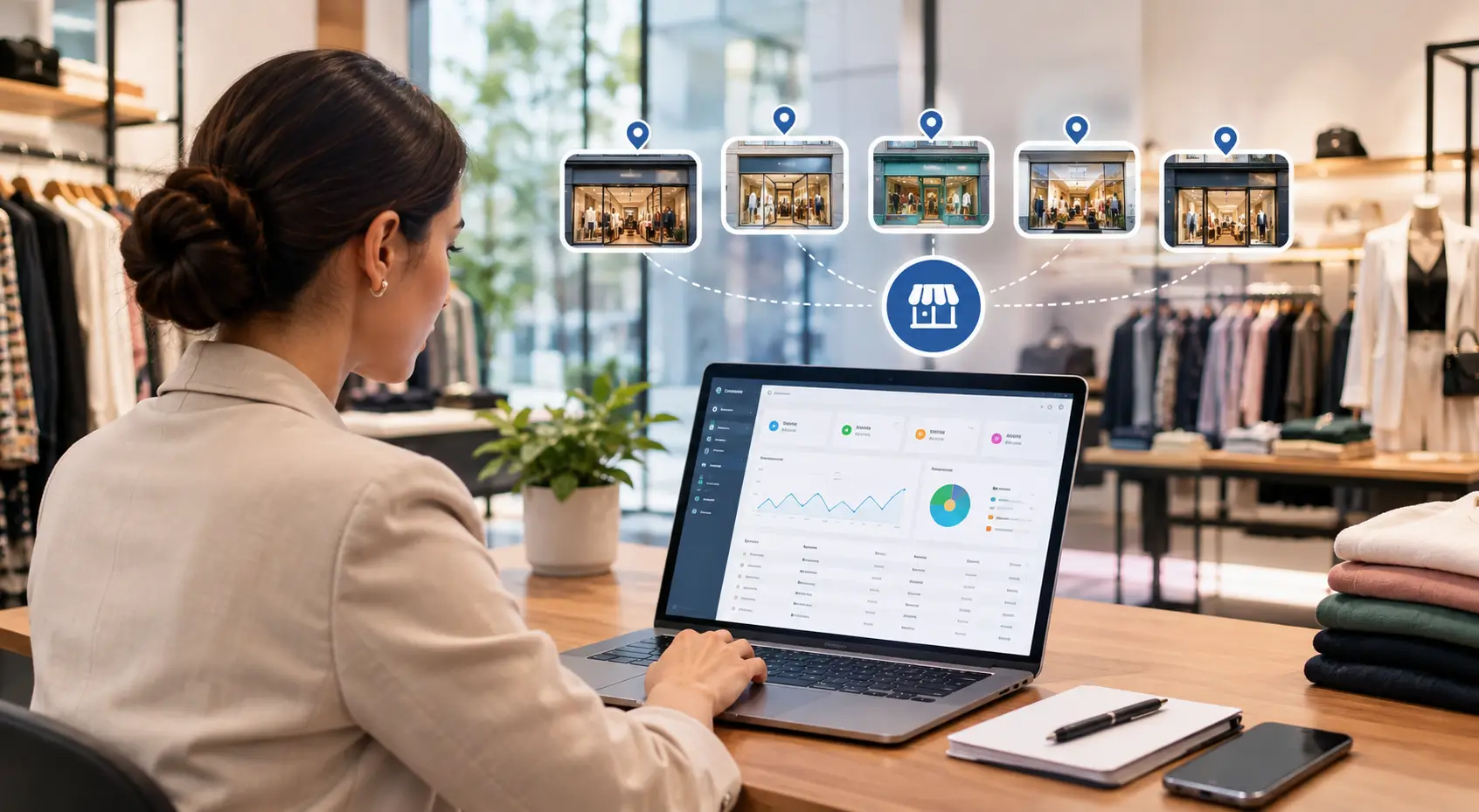
For businesses with multiple store locations, read: Multi-Branch Apparel ERP: How to Manage Multiple Stores
5. Handle the B2B Dealer Rush with G-Order
Retailers buying from you — your wholesale dealers — also have a Diwali stock rush. Many place their last festive replenishment orders in late October and early November. If your ordering process requires them to call, visit, or send WhatsApp messages, you are creating friction at exactly the moment they most need speed.
G-Order — G-Soft ERP’s B2B mobile ordering app — lets your dealers browse your festive catalogue, check availability, and place orders directly from their phones. Orders sync into G-Soft ERP in real time. Your warehouse team can process and dispatch immediately — without waiting for manual order entry.
Additionally, G-Order shows live stock availability. Dealers only see what is actually in stock — so you avoid over-committing on fast-moving festive styles and disappointing dealers with partial deliveries.
For a complete overview of G-Order’s wholesale capabilities, visit the wholesale page.
6. Plan Your Post-Diwali Stock Position
This is the step most apparel retailers skip — and regret in December.
After Diwali (November 8), the market shifts immediately to wedding season. Ethnic wear that did not sell during Diwali becomes EOSS clearance material. However, if you do not know precisely what is left and where it is sitting, you cannot price and promote it effectively.
G-Soft ERP’s slow-moving stock report gives you a clear view — by style, size, colour, and branch — of what did not move during the festive window. Use this report on November 9 to plan your post-Diwali clearance pricing and free floor space for the wedding season new arrivals that should already be on order.
Dhanteras is November 6. Diwali is November 8. 23 days to prepare. G-Soft ERP gives you inventory visibility, barcode POS, loyalty tools, and dealer order management — everything your apparel store needs to run at full capacity through the festive peak. Book a Free Demo →
What Makes 2026 Dhanteras & Diwali Different for Apparel
This year, the festive season arrives later than usual — because of Adhik Maas in the Hindu calendar. Dhanteras is on November 6 instead of the usual late October date.
For apparel retailers, this has two specific implications:
First, there is less separation between Diwali and wedding season. In a normal year, Diwali ends and retailers have 3–4 weeks before wedding season peaks. In 2026, wedding season begins almost immediately after Diwali. Consequently, your festive collection and your early wedding season collection may need to serve the same display floor simultaneously.
Second, the later date means buyers are more informed. Customers have had longer to research, browse social media, and decide what they want. Moreover, they arrive at your store with more specific preferences — size, category, colour, price range. This makes stock depth in the right categories more important than breadth across many categories.
For insights on how to manage multiple store inventory during peak periods, read: Apparel Inventory Management: The Complete Guide
Frequently Asked Questions
1.How should apparel retailers approach EOSS and new collection simultaneously on the same floor?
Use your floor space strategically. Place EOSS in a clearly marked secondary zone — discounted items with visible percentage-off signage. Put the new festive and wedding collection at the front. G-Soft ERP manages both pricing structures simultaneously, applying the correct GST rate to each without manual selection.
2. What is the best way to handle last-minute stock replenishment from vendors before Diwali?
Place orders now — not in the final week. Vendors receive heavy demand from all their customers in late October. Additionally, use G-Soft ERP’s purchase order module to raise POs and track delivery status so you know exactly when stock will arrive and can plan your floor display accordingly.
3. Can G-Soft ERP handle multi-branch billing and inventory simultaneously during peak hours?
Yes. G-Soft ERP’s multi-branch module supports simultaneous POS billing across all branches with real-time inventory sync. A sale at one branch updates stock immediately — preventing over-commitment of the same piece to two customers at different locations.
4. How can I use WhatsApp to drive Diwali footfall to my stores?
Alpha Chatbox integrates with G-Soft ERP and lets you send personalised Diwali messages to your customer base via WhatsApp — including loyalty point balances, new collection previews, and festive offers. Messages are triggered from customer data in G-Soft ERP, so they are personalised rather than generic.
5. After Diwali, how do I transition quickly to wedding season inventory?
Run G-Soft ERP’s slow-moving stock report on November 9 to identify unsold festive stock. Price it for clearance immediately. Simultaneously, bring in your pre-ordered wedding season collection — the two can coexist on your floor with different pricing and display zones.
Conclusion
Diwali is one of the two biggest revenue windows of the year for Indian apparel retailers — the other being wedding season, which begins immediately after. The retailers who maximise both are the ones who are stocked correctly, billed fast, connected to their dealers digitally, and informed by live data rather than end-of-month reports.
G-Soft ERP gives you every operational tool you need — from barcode POS and inventory visibility to loyalty management, B2B ordering via G-Order, and multi-branch control. It is used by 5,000+ apparel, lifestyle, and footwear businesses across India — businesses that run their Diwali peak on G-Soft, not on guesswork.
Dhanteras is November 6. Start now.