
The wedding season is a major sales opportunity for footwear retailers. Customers look for stylish shoes, traditional designs, and comfortable options for every celebration. As a result, retailers need to prepare their inventory before demand increases.
However, stocking the right footwear is not always easy. Trends change, customer preferences vary, and unsold products can affect profits. Therefore, retailers must understand which styles to stock and how to manage their inventory.
In this blog, we explore the top wedding season footwear trends for 2026–27. We also explain how footwear retailers can plan their stock, improve sales, and manage inventory more efficiently.
Why the Wedding Season Matters for Footwear Retailers ?
Indian weddings include several functions, such as mehendi, sangeet, wedding ceremonies, and receptions. Each occasion creates demand for different footwear styles.
For example, customers may prefer embellished flats for daytime functions. Meanwhile, they may choose elegant heels for evening celebrations.
Moreover, weddings attract customers with different budgets and fashion preferences. Retailers can serve these customers by offering a balanced collection.
Here is why wedding season planning matters:
- Higher sales opportunities: Customers often purchase new footwear for wedding functions.
- More product variety: Traditional, party-wear, and formal footwear appeal to different buyers.
- Better cross-selling: Retailers can suggest matching accessories or additional footwear options.
- Improved customer retention: A well-planned collection encourages customers to return for future occasions.
Therefore, retailers should prepare their collections early and track changing customer demand.
7 Wedding Season Footwear Trends for 2026–27
Understanding upcoming trends helps retailers make smarter buying decisions. However, every trend may not suit every store. Retailers should consider their target customers, location, and price range before placing large orders.
1. Embellished Juttis and Mojaris
Traditional footwear remains an important choice for Indian weddings. Embellished juttis and mojaris complement lehengas, sarees, sherwanis, and kurta sets.
This season, retailers can explore designs featuring zari work, pearls, mirror work, and colourful embroidery. These details appeal to customers who want footwear that matches their festive outfits.
However, avoid stocking too many similar designs. Instead, offer different colours, patterns, and price points.
Retailer tip: Keep popular traditional designs in stock and reorder the styles that sell consistently.
2. Comfortable Block Heels
Customers want footwear that looks attractive and feels comfortable. Wedding celebrations often involve hours of standing, walking, and dancing.
Therefore, block heels can be a practical addition to a wedding collection. They offer a wider base than stilettos and pair well with sarees, gowns, and lehengas.
Retailers should consider different heel heights and designs. Neutral shades can appeal to customers seeking versatile options. Meanwhile, embellished styles may attract shoppers looking for festive footwear.
Retailer tip: Stock comfortable block heels in different sizes and colours to serve more customers.
3. Metallic and Embellished Sandals
Metallic footwear is another style worth considering for the wedding season. Gold, silver, and champagne shades can complement many festive outfits.
In addition, sandals with subtle stones, decorative straps, or shimmer finishes can attract customers looking for party-wear options.
These designs also work well for receptions and engagement parties. As a result, retailers can offer them to customers shopping for several occasions.
Retailer tip: Start with a balanced selection of metallic sandals. Increase your orders only when sales data supports stronger demand.
4. Bridal Flats and Cushioned Footwear
Not every customer wants to wear high heels. Many brides and wedding guests prefer flats that offer comfort without losing their festive appeal.
Embroidered flats, cushioned sandals, and decorative juttis can meet this need. They are especially suitable for customers who spend long hours at wedding functions.
Furthermore, bridal flats can appeal to shoppers who want a second pair for dancing or changing into later in the event.
Retailer tip: Include comfortable footwear in your wedding collection instead of focusing only on high heels.
5. Platform Heels and Wedges
Platform heels and wedges are useful options for customers who want extra height. They can also provide a practical alternative to narrow heels, depending on the design and fit.
Retailers can explore festive platforms with metallic finishes, decorative straps, or elegant textures. Meanwhile, wedges may suit customers attending outdoor celebrations.
However, comfort and stability should remain important buying considerations.
Retailer tip: Offer a mix of simple and embellished designs to serve both everyday festive shoppers and premium buyers.
6. Stylish Loafers and Ethnic Footwear for Men
Wedding footwear is not limited to women’s collections. Men also look for shoes that complement sherwanis, bandhgalas, suits, and Indo-Western outfits.
Traditional mojaris remain a useful option. At the same time, formal loafers and dress shoes can appeal to customers attending receptions and other celebrations.
Therefore, retailers should plan their men’s footwear collection according to local demand.
Retailer tip: Keep classic colours and versatile designs alongside festive options. Also, check size availability before the peak wedding period.
7. Contemporary Kolhapuris and Fusion Footwear
Customers increasingly have different styling preferences for traditional occasions. Some prefer classic ethnic footwear, while others choose designs that combine traditional details with modern shapes.
Contemporary Kolhapuri sandals can help retailers serve both groups. Decorative straps, updated silhouettes, and metallic finishes can make these styles suitable for festive outfits.
Fusion footwear can also appeal to younger customers who prefer experimenting with their wedding looks.
Retailer tip: Test new designs in smaller quantities first. Then, expand your collection according to customer response.
How to Choose the Right Footwear Stock for Wedding Season
Following trends is important. However, retailers must also understand which products their customers are likely to buy.
A well-planned collection balances popular designs, different price ranges, and practical inventory requirements.
Here are five steps to help you plan your stock.
1. Analyse Previous Sales
Start by reviewing your previous wedding season sales. Identify the styles, colours, sizes, and price ranges that performed well.
Next, compare sales across different months and store locations. This helps you identify products that deserve more attention.
For example, if embellished flats sold quickly last season, consider maintaining sufficient stock. However, avoid repeating large orders for products that remained unsold.
2. Maintain the Right Size Range
Footwear retailers must manage sizes carefully. A design may be popular, but missing sizes can lead to lost sales.
Therefore, review size-wise sales before placing new orders. Keep fast-selling sizes available and monitor slower-moving sizes.
Also, check stock regularly during the wedding season. This helps your team identify shortages before customers leave without making a purchase.
3. Offer Different Price Points
Wedding shoppers have different budgets. Some customers look for affordable festive footwear, while others prefer premium designs.
For this reason, your collection should include multiple price ranges.
A balanced assortment helps you serve more customers without relying on a single category. Moreover, clear product information makes it easier for your sales team to recommend suitable options.
4. Track Fast-Moving and Slow-Moving Products
Not every footwear design sells at the same speed. Some products may sell out quickly, while others may occupy shelf space for months.
Regular stock analysis helps you identify these differences. You can then reorder popular products and plan suitable offers for slow-moving stock.
As a result, you can use your inventory budget more effectively.
5. Plan Replenishment Before Peak Demand
Waiting until a product sells out can create problems during the wedding season. Suppliers may need additional time to fulfil new orders.
Therefore, monitor stock levels and supplier lead times in advance. Set reorder points for important products and review them regularly.
This approach helps reduce stock shortages during busy sales periods.
Common Inventory Mistakes Footwear Retailers Should Avoid
Even a popular collection can underperform when inventory is poorly managed. Fortunately, retailers can avoid several common mistakes with better planning.
Overstocking trendy designs: A popular trend does not guarantee strong sales at every store. Test demand before making large purchases.
Ignoring size-wise demand: Too many products in one size can create shortages in others. Review size-level sales to maintain a balanced assortment.
Delaying replenishment: Late orders can leave shelves empty during peak demand. Monitor stock levels and order products on time.
Managing stock manually: Spreadsheets and paper records can become difficult to maintain when product volumes increase. They can also make it harder to track stock movement accurately.
Ignoring branch-level demand: Different stores may have different customer preferences. Use branch-wise sales data to plan stock transfers and purchases.
By addressing these issues early, retailers can improve stock availability and reduce avoidable losses.
How GSoft ERP Helps Footwear Retailers Manage Wedding Season Sales
Managing footwear inventory becomes more challenging when a business handles many designs, sizes, colours, suppliers, and store locations.
This is where a retail management solution can help. GSoft ERP provides features designed for apparel, lifestyle, and footwear businesses.
Its inventory management and POS capabilities help retailers manage daily operations more efficiently.
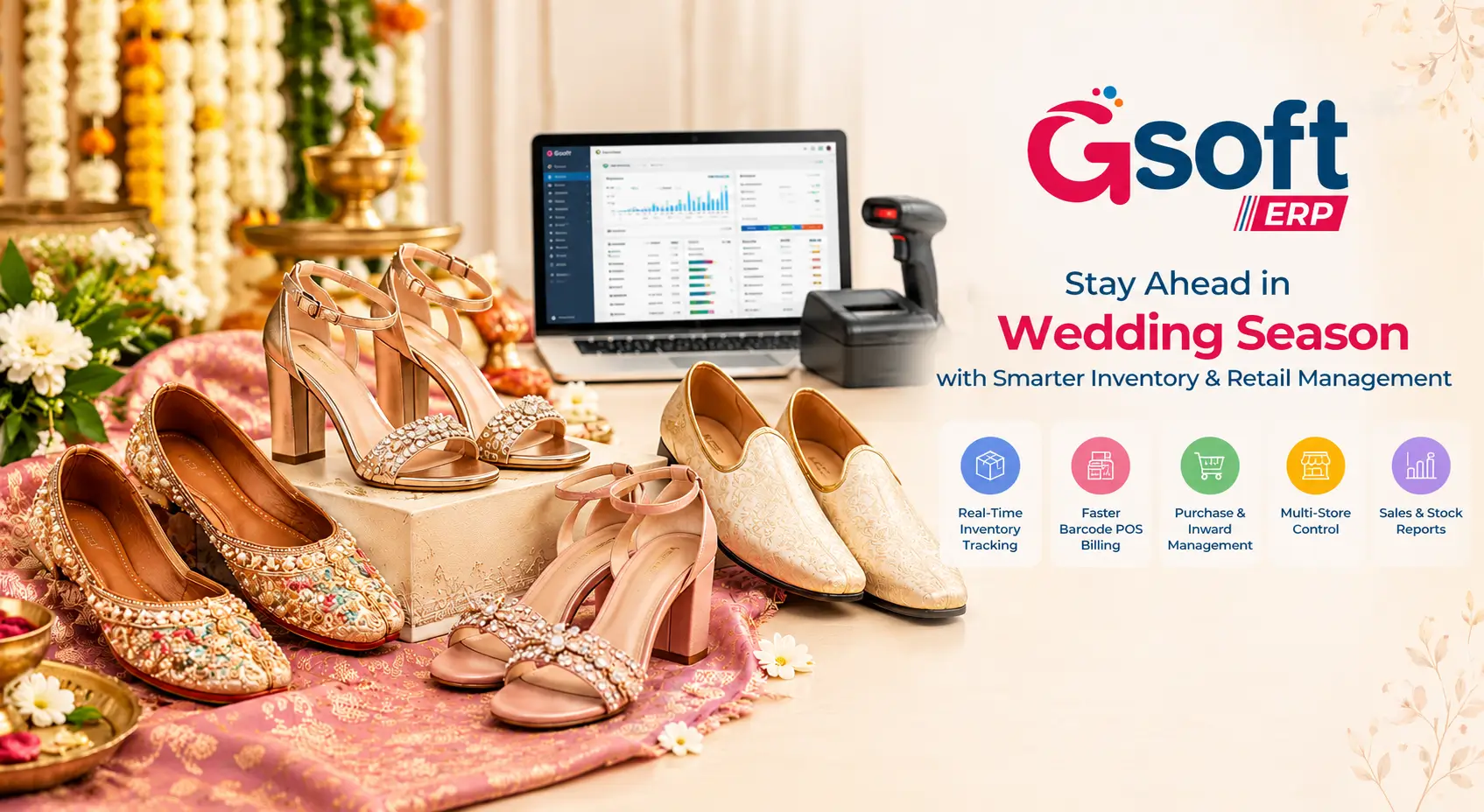
Real-Time Inventory Management
Retailers need accurate stock information to make better purchasing decisions. GSoft ERP offers stock tracking and inventory reporting features that support inventory control.
With better visibility, teams can review stock availability and identify products that need attention.
Faster Barcode POS Billing
Long queues can affect the customer experience during busy wedding sales. GSoft ERP supports barcode-based POS billing to help streamline checkout.
Faster billing also helps staff handle customer purchases more efficiently during peak hours.
Purchase and Inward Management
Timely purchasing is important when wedding demand increases. GSoft ERP includes purchase and inward management features to support stock replenishment processes.
Retailers can use these workflows to manage incoming products and maintain better control over inventory.
Multi-Store Inventory Control
Businesses with multiple branches need visibility across their stores. GSoft ERP supports centralised chain-store and warehouse management.
This helps retailers monitor branch-wise stock movement and review sales across locations.
Sales and Stock Reports
Sales reports help retailers understand which products perform well. GSoft ERP provides reporting and analysis features for reviewing sales, purchases, stock, and business performance.
Retailers can use these insights to plan future purchases and identify slow-moving products.
Want to manage your footwear retail business more efficiently? Explore the features of GSoft ERP’s retail management solution to learn how it can support your inventory, billing, and multi-store operations.
Final Thoughts
Wedding season 2026–27 offers footwear retailers an opportunity to serve customers with a well-planned collection. Embellished juttis, comfortable block heels, metallic sandals, bridal flats, and men’s festive footwear are useful categories to consider.
However, successful retailing involves more than following fashion trends. Retailers must also track demand, maintain the right sizes, and replenish popular products on time.
With accurate inventory records and regular sales analysis, businesses can make better purchasing decisions. Moreover, retail management software can help simplify billing, stock control, and multi-store operations.
Prepare your collection early, understand your customers, and use reliable sales data to make smarter stocking decisions this wedding season.
Frequently Asked Questions
1. What footwear trends should retailers consider for the 2026–27 wedding season?
Retailers can consider embellished juttis, mojaris, block heels, metallic sandals, bridal flats, platform heels, and men’s festive footwear. However, the right selection depends on local demand and customer preferences.
2. How can footwear retailers prepare for wedding season sales?
Retailers should review previous sales, check size-wise demand, plan purchases early, and maintain stock of popular products. They should also monitor inventory regularly during peak sales periods.
3. How can retailers avoid excess footwear inventory?
Retailers can review sales reports, test new designs in smaller quantities, and monitor slow-moving stock. These steps help them make more informed purchasing decisions.
4. Why is size-wise inventory management important for footwear stores?
Footwear customers need the correct size to complete a purchase. Tracking inventory by size helps retailers reduce stock gaps and avoid holding too many units of slow-selling sizes.
5. How can ERP software help footwear retailers?
ERP software can help retailers manage inventory, barcode billing, purchases, sales reports, and multiple store locations. These features support better visibility and more organised retail operations.
6. Is GSoft ERP suitable for footwear retailers?
GSoft ERP offers retail management features for footwear stores, including POS billing, inventory tracking, purchase management, reporting, and chain-store management. Retailers can explore its features to assess their business requirements.