
Footwear businesses manage many products, sizes, colours and designs every day. Therefore, keeping track of stock can become difficult without the right system. A store may have enough shoes in one size but run out of another. Similarly, a warehouse may show stock that is not available for sale.
This is where footwear inventory management software can help. It allows businesses to track shoes by size, pair, design and SKU. As a result, retailers can manage stock more easily, avoid common mistakes and serve customers better.
In this blog, we will explain how footwear inventory works, why size runs and pairs matter, and how the right software can help footwear businesses.
Why Is Footwear Inventory Management Different?
Footwear inventory is different from many other types of retail stock. This is because every shoe design comes in different sizes, colours and styles.
For example, a shoe design may be available in sizes 6, 7, 8, 9 and 10. However, each size may have a different stock quantity. A store might have 10 pairs in size 7 but only 2 pairs in size 9.
As a result, tracking only the total number of shoes is not enough. Businesses must also know how many pairs are available in each size.
Moreover, footwear retailers may sell products across multiple stores, warehouses and online channels. Therefore, they need a clear view of stock at every location.
What Are Size Runs in Footwear Inventory?
A size run is a group of different shoe sizes available under one design or style.
For example, a footwear brand may sell one sneaker design in sizes 6 to 10. Together, these sizes form a size run.
However, the quantity of each size may not be the same. For instance:
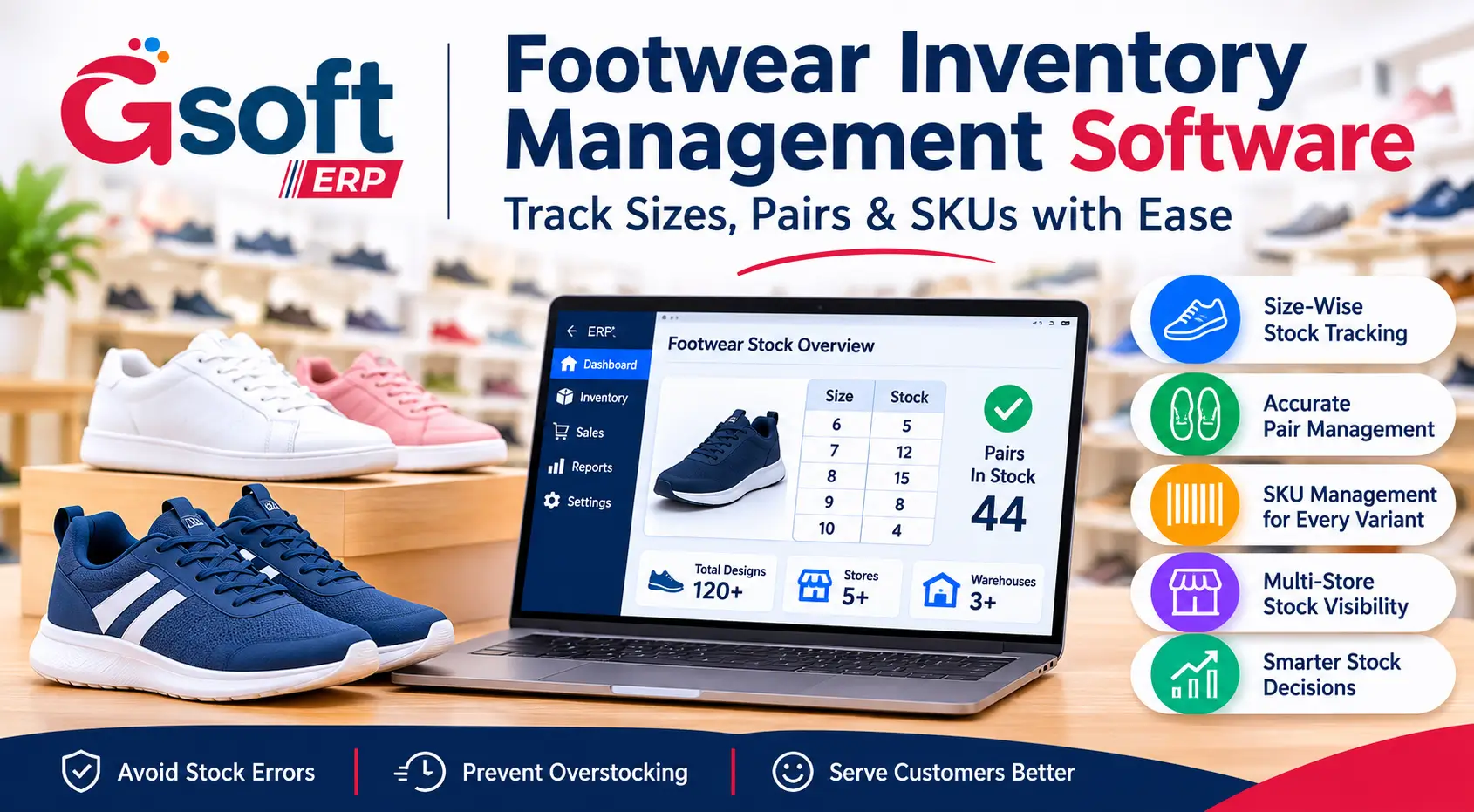
- Size 6: 5 pairs
- Size 7: 12 pairs
- Size 8: 15 pairs
- Size 9: 8 pairs
- Size 10: 4 pairs
Therefore, size-wise tracking is important for footwear businesses.
Why Are Size Runs Important?
Size runs help retailers understand which sizes sell faster. They can also see which sizes need restocking.
For example, if size 8 sells more often than size 10, the retailer can plan future purchases based on actual sales.
In addition, size-wise stock records help staff answer customer questions quickly. As a result, customers can find the right size without unnecessary delays.
Why Is Pair Management Important?
Unlike many other retail products, footwear is sold in pairs. Therefore, businesses must track complete pairs instead of counting individual shoes as separate sale units.
For example, if a store has 20 complete pairs, it can sell 20 pairs of shoes. However, if one shoe is missing or damaged, that pair may no longer be ready for sale.
Common Pair Management Problems
Manual stock tracking can lead to several problems. For example:
- Staff may enter the wrong pair quantity.
- Damaged shoes may not be updated in stock records.
- One shoe may get separated from its matching pair.
- The system may show stock that is not ready for sale.
As a result, the store may face stock errors and customer complaints.
Therefore, footwear inventory management software should support accurate pair-wise stock tracking. This helps businesses maintain correct stock records and avoid confusion.
What Are SKUs in Footwear Inventory?
SKU stands for Stock Keeping Unit. It is a unique code used to identify a product.
In footwear, one shoe design may have several SKUs because it comes in different sizes or colours.
For example, a black sneaker in size 7 and the same sneaker in size 8 should have separate product records or SKU variations.
Why Does SKU Management Matter?
SKU management helps businesses identify each product variation correctly.
Moreover, it makes stock tracking easier. Staff can check the exact size, colour and design instead of searching through a large product list.
For example, when a customer asks for a black sneaker in size 9, staff can check its SKU and stock quantity.
Similarly, SKU-based reports help retailers understand which products sell well and which ones move slowly.
Common Footwear Inventory Management Challenges
Footwear retailers face many stock-related problems. However, most of these problems can be reduced with proper stock records and the right software.
1. Size-Wise Stock Mismatches
A store may have enough stock of one design but not in the size customers need. For example, size 7 may be available in large numbers, while size 9 is out of stock.
As a result, customers may leave without buying. Therefore, retailers need clear size-wise stock records.
2. Overstocking Slow-Moving Products
Some shoe designs and sizes sell faster than others. However, businesses may continue buying products that are not selling well.
Consequently, money gets blocked in slow-moving stock. In addition, storage space may get filled with products that customers do not often buy.
Sales reports can help retailers make better purchase decisions.
3. Managing Multiple Stores and Warehouses
Retailers with several stores need to track stock at every location. However, checking each store separately takes time.
For example, one store may have a shoe size that another store needs. Therefore, a connected stock system can help staff check availability across locations.
4. Manual Stock Updates
Manual stock entry can lead to mistakes. For example, staff may forget to update stock after a sale or return.
As a result, the system may show an incorrect quantity. This can create problems during billing and stock checks.
5. Limited Stock Information
Without proper reports, retailers may not know which sizes sell quickly or which products need restocking.
Therefore, they may make purchase decisions without clear information. Good inventory reports help businesses plan stock with more confidence.
How Does Footwear Inventory Management Software Help?
Footwear inventory management software helps businesses manage product details, sizes, pairs and stock quantities in one system.
Moreover, it reduces the need for manual records. As a result, staff can spend less time checking stock and more time serving customers.
1. Size-Wise Inventory Tracking
The software allows retailers to track stock for each shoe size. Therefore, they can quickly check which sizes are available.
For example, staff can see whether a particular design is available in size 6, 7, 8 or 9.
In addition, size-wise reports help retailers understand customer demand and plan restocking.
2. SKU Management
Each product and its variations can be recorded with the right SKU details.
This makes it easier to search for a product during billing, stock checks and purchase entry. Furthermore, it reduces confusion between similar designs and sizes.
3. Pair-Wise Stock Management
Footwear businesses need accurate pair counts. Therefore, the software should help them record and track complete pairs.
As a result, retailers can reduce stock differences and maintain better records of available products.
4. Multi-Location Inventory
Businesses with multiple stores or warehouses need a shared view of stock.
With a connected system, staff can check product availability at different locations. Moreover, businesses can plan stock transfers when one store has extra stock and another needs it.
5. Purchase Management
Purchase management helps businesses record incoming footwear stock.
For example, retailers can record products received from suppliers, along with their sizes, designs and quantities.
In addition, purchase records make it easier to check supplier details and past orders. This supports better purchase planning.
6. Sales and Stock Updates
Every sale affects the available stock. Therefore, inventory records should stay updated after billing.
Similarly, returns and other stock changes should be recorded correctly. This helps businesses maintain more accurate stock information.
7. Inventory Reports
Reports help retailers understand how their stock is performing.
For example, they can check:
- Which shoe sizes sell the most.
- Which designs are selling slowly.
- Which products need restocking.
- How much stock is available at each store.
- Which products have low stock.
As a result, business owners can make better decisions using their sales and stock data.
How Does ERP Software Support Footwear Businesses?
Inventory is only one part of a footwear business. Retailers also manage billing, purchases, suppliers, customers and accounts.
Therefore, using separate systems for each task can make daily work difficult.
An ERP system brings these business activities together. For example, when a product is sold, the sale can update stock records and billing information.
Similarly, purchase entries can update inventory records. As a result, businesses can manage more activities through one connected system.
Moreover, ERP software helps owners get a clearer view of their business through reports and records.
How Can GSoft ERP Help Footwear Businesses?
GSoft ERP, a product of Alpha ERP, offers business management solutions for retail and footwear businesses.
It helps businesses manage important activities such as billing, inventory, purchases and sales records. Moreover, a connected ERP system can reduce manual work and make daily tasks easier to manage.
Key Benefits of GSoft ERP
- Inventory Management: Manage product stock and keep inventory records updated.
- Billing and POS: Handle retail billing and sales transactions.
- Purchase Management: Record purchases and manage supplier details.
- Sales Tracking: Check sales records and understand product performance.
- Business Reports: Use reports to review sales and stock information.
- Multi-Store Management: Support stock and business operations across different locations.
Furthermore, GSoft ERP helps bring important business activities into one system. Therefore, footwear retailers can manage their daily work with better control.
What Should You Look for in Footwear Inventory Management Software?
Choosing the right software is important for smooth business operations. However, not every inventory system offers the features needed by footwear retailers.
Before selecting a solution, check whether it supports the following features:
- Size-Wise Stock Tracking: It should help track each shoe size separately.
- SKU Management: It should support different designs, colours and sizes.
- Pair Management: It should help maintain accurate pair quantities.
- Purchase Management: It should record incoming stock and supplier details.
- Sales and Billing: It should connect sales with stock updates.
- Multi-Store Support: It should help manage stock across different locations.
- Reports: It should provide useful stock and sales reports.
- Easy to Use: Staff should be able to learn and use the system without difficulty.
In addition, check whether the software can support your business as it grows. This will help you avoid changing systems too often.
What Is the Future of Footwear Inventory Management?
Footwear retail is changing as more businesses use digital tools to manage their work.
In the coming years, businesses will need better ways to track stock, understand sales and manage multiple sales channels.
For example, digital stock records can help retailers check product availability faster. Similarly, sales reports can help them understand which sizes and designs customers prefer.
Moreover, connected ERP systems can help bring billing, inventory and purchase records together.
As a result, footwear businesses can make faster decisions and offer better service to customers.
Frequently Asked Questions
1. What Is Footwear Inventory Management Software?
Footwear inventory management software helps retailers track shoe stock by size, design, colour and SKU. It also helps manage purchases, sales and stock updates. As a result, businesses can keep better stock records.
2. What Is a Size Run in Footwear Inventory?
A size run is a range of shoe sizes available under one design or style. For example, a sneaker available in sizes 6, 7, 8, 9 and 10 has a size run of five sizes.
3. What Is SKU Management in Footwear?
SKU management means using unique product codes to identify different footwear products and their variations. For example, the same shoe in size 7 and size 8 can have separate SKU records.
4. Why Is Pair Management Important in Footwear?
Footwear is sold in pairs. Therefore, retailers must track complete pairs correctly. This helps prevent stock errors and makes sure that the quantity shown in the system matches the available stock.
5. How Does Footwear Inventory Software Prevent Stock Shortages?
The software helps retailers track stock by size and product. In addition, stock reports can show which products are running low. As a result, businesses can plan purchases before popular sizes run out.
6. Can Footwear Inventory Software Manage Multiple Stores?
Yes. Software with multi-location support can help retailers check stock across different stores and warehouses. Therefore, they can plan stock transfers and manage product availability more easily.
7. What Is the Difference Between Footwear Inventory Software and ERP Software?
Footwear inventory software mainly focuses on stock tracking. However, ERP software can connect inventory with billing, purchases, sales and other business activities. Therefore, ERP offers a wider set of business management features.
8. How Can GSoft ERP Help Footwear Businesses?
GSoft ERP helps footwear businesses manage activities such as inventory, billing, purchases and sales records. Moreover, it brings important business tasks together to support smoother daily operations.
9. What Features Should Footwear Inventory Management Software Include?
It should include size-wise stock tracking, SKU management, pair management, purchase records, billing, multi-store support and inventory reports. These features help retailers manage stock more accurately.
10. Why Should Footwear Retailers Use ERP Software?
Footwear retailers manage many products, sizes, purchases and sales every day. ERP software connects these activities in one system. As a result, business owners can manage operations more easily and make better decisions.
Conclusion
Managing footwear inventory requires more than counting the total number of shoes. Retailers must also track sizes, pairs, designs and SKUs.
However, manual stock records can lead to errors and delays. Therefore, using the right footwear inventory management software can make stock management easier.
With features such as size-wise tracking, SKU management, pair management and inventory reports, businesses can improve stock control.
Moreover, an ERP solution like GSoft ERP can help connect inventory with billing, purchases and sales. As a result, footwear businesses can manage daily operations with better control and support future growth.